Long-Range FPV Quadcopter w/ Bluetooth: Setup & Tips

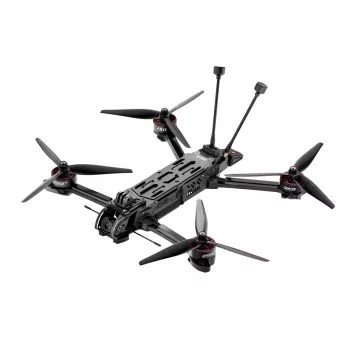
Advanced Long-Range FPV Quadcopter with Bluetooth: Features, Setup, and Flight Tips
A long-range FPV quadcopter is built for extended-distance flights while preserving responsive control and a clear first-person video feed. Bluetooth adds a practical layer for quick device pairing, streamlined configuration, and compatible accessory support—without relying solely on tiny buttons and on-screen menus. Below is a buyer-focused breakdown of what “advanced” really means, how Bluetooth fits into real-world flying, and how to set up and test a long-range FPV quadcopter responsibly.
What Makes a Long-Range FPV Quadcopter “Advanced”
“Long-range” isn’t just a single number on a spec sheet. A true long-range FPV setup is a complete system where each part supports stable control and dependable video at distance.
- System-level range performance: Efficient motors/props, a solid control link, a stable video link, and correct antenna placement all matter together. Weakness in any one area can limit real-world range.
- More capable flight behavior: Advanced models typically offer stronger stabilization, smarter failsafe actions, and more tunable rates/expo so the quad can feel smooth for cruising or sharp for technical maneuvers.
- Bluetooth-driven convenience: Bluetooth can simplify pairing, app-based configuration, and quick adjustments compared to button-only interfaces—especially for pre-flight tweaks.
Bluetooth in FPV: Practical Uses
Bluetooth doesn’t replace your control or video transmission systems; it complements them by reducing setup friction and making configuration more accessible.
- Fast pairing for settings changes: Connect a phone or compatible device to review profiles, modes, and saved parameters without digging through layered menus.
- Firmware/app connectivity (when supported): Some ecosystems use Bluetooth to assist with calibration prompts, parameter checks, or accessory integration.
- Pre-flight verification: Quickly confirm key status indicators (such as modes and basic health checks) so you spend less time troubleshooting at the field.
Key Performance Areas to Evaluate
When shopping or comparing long-range FPV quadcopters, focus on predictable performance rather than best-case claims.
- Range and signal reliability: Prioritize consistent control and video performance in your typical flying environment. “Longest range” is less useful than “most stable link.”
- FPV experience quality: Look for low perceived latency, clear video, and good interference resistance—especially if you fly near Wi-Fi congestion or other RF noise.
- Battery endurance and power planning: Long-range flying is conservative flying. You need a large return-to-home margin and a plan for wind, battery sag, and unexpected holds.
- Build quality and vibration control: A rigid frame, reliable arms, and clean vibration management improve handling and can reduce video “jello” in flight.
- Ease of use: Stable hover, intuitive controls, and predictable behavior reduce the learning curve and make early range testing safer.
Quick Specification Snapshot
Use this checklist to compare what matters most for long-range FPV plus Bluetooth convenience. Also confirm what’s included in the box (drone, controller, FPV display/goggles, batteries, chargers) so there are no surprises after delivery.
| Category | What to Check | Why It Matters |
|---|---|---|
| Control link | Advertised range + real-world reliability, antenna type | Stable control at distance reduces risk of failsafe events |
| Video link (FPV) | Resolution/clarity, latency, interference handling | Improves situational awareness and landing precision |
| Battery system | Capacity, charge time, number of batteries included | Determines practical flight time and safe return margin |
| Bluetooth features | Pairing process, app support, settings access | Faster configuration and easier pre-flight adjustments |
| Safety functions | Failsafe behavior, low-battery warnings, return logic | Helps prevent flyaways and supports safer operations |
| Airframe durability | Frame rigidity, vibration control, parts availability | Better stability, clearer video, and lower maintenance hassle |
Setup and First Flight (Step-by-Step)
A disciplined first setup reduces the odds of a failed maiden flight and makes long-range testing more predictable.
- Charge and inspect batteries: Fully charge packs and check for swelling, damage, or loose connectors before use.
- Pair Bluetooth (if applicable): Confirm the correct device/app is connected and review key settings before powering on props.
- Calibrate as required: Follow the manual for IMU/compass calibration and controller stick calibration if prompted.
- Do a short-range hover test: In an open area, verify stable hover, clean yaw/pitch/roll response, and steady FPV feed.
- Set conservative battery alerts: Use a low-battery threshold that leaves a safe reserve, then plan a clear turnaround point.
Range, Antennas, and Flight Planning
Long-range success depends on planning, not just equipment. Antenna orientation, obstacles, and wind can change outcomes dramatically.
Safety, Legal Considerations, and Responsible Use
Before any FPV flight—especially extended-range practice—confirm you’re operating within local rules and in an appropriate area. In the U.S., start with the FAA’s guidance on responsible UAS operation: https://www.faa.gov/uas. For RF compliance and equipment authorization considerations, the FCC is a helpful reference: https://www.fcc.gov/engineering-technology/laboratory-division/general/equipment-authorization.
Product Options Available Now
- Advanced Long-Range FPV Quadcopter with Bluetooth — built for extended-distance FPV flying with Bluetooth convenience for compatible pairing and configuration.
- Purposeful Progress: How to Set Goals with Kaizen & Ikigai (eBook) — a digital guide that can help structure practice routines and build consistent training habits for technical hobbies.
FAQ
Does Bluetooth increase the flight range of an FPV quadcopter?
No. Bluetooth is mainly used for pairing, configuration, and compatible accessory connectivity; flight range depends on the control link, video system, antennas, environment, and power management.
What is a safe way to test long-range performance for the first time?
Test in a wide open area, increase distance gradually, and monitor control/video quality indicators continuously. Keep a conservative battery reserve and turn back immediately at the first sign of instability.
What should be checked before every FPV flight to reduce risk?
Check battery condition and fitment, prop tightness, controller link, and FPV video feed before arming. Confirm failsafe and low-battery warnings are set, evaluate wind/weather, and ensure your flight plan complies with local rules.










Leave a comment